Educating Adolescents, Nurturing the Eternal in the Human Being
Center for Anthroposophy’s Waldorf High School Teacher Education Program (WHiSTEP)
“We do not teach subjects, we teach children and young people.”
— Dietrich Esterl
By David Barham, Nathan Wilcox, Marisha Plotnik, Cedar Oliver, Jake Gerber & Paul Gierlach
Waldorf high school educators engage both their understanding of human development and the depth of their academic disciplines to meet adolescent students where they are and help them on their path to becoming themselves. This is our concept of academic rigor. What we are really doing is helping young people pick up the reins of their own horses and begin guiding their own destiny.
To do this requires teachers that are passionate about both their subjects and the young people they teach. Those that delight in sharing the beauty and depth of their disciplines while embracing the whirlwind years of adolescence, choosing to hold tight to the rollercoaster of this remarkable stage of human development. Their work is grounded in a living picture of each student as an individual becoming, taking the study of human development as seriously as the study of their academic discipline. It is this combination of subject mastery, reverence for adolescent development, and deep regard for the individuality of each student that shapes their understanding of academic rigor.
And so, by rigor, what we really mean is that as a teacher, I know my subject well enough, and I have enough true interest in the human beings in front of me to match what I bring with what they need, collectively and individually. I don’t teach facts, I teach young human beings how to think. I use my academic field to develop capacities that lead to the extraordinary ability of developing independent judgments—of thinking for oneself in a loud and fast-moving world overloaded with propaganda and marketing pitches.
To do this, I have to be more than an educator—I have to be an artist.
The metamorphosis of the individual teacher through deep immersion in the arts—eurythmy, spatial dynamics, speech, singing, drama, drawing and painting, sculpture—helps us transform from subject experts into Waldorf teachers. Education is an art and working with the arts helps us learn to sculpt our lessons, understand what to include and what to exclude, and to bring subjects to life in ways that resonate emotionally with our students, not just intellectually. It also teaches us to be humble in our beginner’s mind.
The world will not be transformed by abstract, intellectual content alone. In fact, in a head-to-head battle with AI around content acquisition, we will always lose. But in contextualizing what our students learn, meeting them emotionally as well as intellectually, and most importantly, helping move our students to self-directed action, we operate in a human realm where machines can support the human journey, but not dictate its focus or direction.
Our vision of academic rigor speaks to the whole human being. An underdeveloped emotional life, a stunted heart does not leave our students ready to meet themselves and the world after graduation. A will lamed by fear and apathy equally leaves our students ill-prepared for taking hold of their own paths, unable to reach their own Grail Castle.
As adolescents make the journey from masters of their subjective self in the early grades of high school to the richness of the objective world in the later years, they are working toward the capacity to form independent judgment. Our work with adolescents is to stimulate this quality of awakening:
“Then we may confidently say to ourselves that we have taken the right path in educating children, because we did not force the subject matter on them; neither did we dictate our own attitude to them, because we were content to remove the hurdles and obstacles from the way so that eternal core could enter life openly and freely. And now, during the last stage, our education must take the form of awakening the students. We make our stand in the school saying, ‘We are the cultivators of the divine-spiritual world order; we are its collaborators and want to nurture the eternal in the human being.’” — Rudolf Steiner, Waldorf Education and Anthroposophy II (GA 304a), London, August 30, 1924, Lecture XII How do we see this enhanced vision of academic rigor in the subject seminars in WHiSTEP?
Let’s hear directly from some of our instructors.
From Nathan Wilcox, English Subject Seminar
Teenagers love stories. They love telling them, and they love hearing them. And during the four year Waldorf High School journey, teenagers experience the full breadth of storytelling’s power. Oedipus’s horror, Gilgamesh’s failures, Ma Joad’s strength, Elizabeth Bennet’s wit, Walter Younger’s passion, Jesmyn Ward’s imagery, Alyosha Karamazov’s awakening: students who plumb such depths uncover humanity’s incredible potential.
A Waldorf High School English teacher is not tasked with simply showing students the power of storytelling. Such teachers are tasked with helping students discover that the greatness to be found on the written page can also be found within themselves.
From Marisha Plotnik, Mathematics Subject Seminar
Mathematics is an ideal discipline through which to develop and train the clear, flexible, dynamic, thinking that is ready to apprehend the new ideas which humanity needs for our future. Much of ordinary mathematics education emphasizes acquiring speed with mechanical, procedural, techniques which can today be outsourced to machines and are thus irrelevant when seen as an end in themselves. Instead, we take up those aspects of mathematics that call for us to develop a qualitative sense for number and space and ask us to practice the transformation of one thought into another. Certain areas of mathematics - projective geometry, for example - even ask us to challenge long-held assumptions and to form entirely new thoughts. Because mathematics always takes place in the clear light of thinking, we can always experience certainty in the presence of mathematical truth;so we can stretch and expand our thinking while remaining rooted in truthfulness. This experience is invaluable in the life of the developing adolescent.
Also essential for the aspiring teacher of mathematics is a sense that mathematics is one cohesive, beautiful, landscape where every thought is connected to every other thought in the same sense that our Earth is one connected whole. Many curriculum guides or scope-and-sequence documents provide a laundry list of isolated skills that should be practiced and mastered. For the teacher, this is always overwhelming, frustrating, and impossible: for the student it is tedious and meaningless. Instead, we take up the curriculum thematically, considering how a theme like “trigonometry” is both a development of certain essential experiences of ratio and proportion, and a unifying thought that can describe every imaginable curve and make sense of the complex numbers. We dive deeply into a different theme each year, while recognizing how each one is simply a unique perspective on a unified whole.
From Cedar Oliver, Physics & Chemistry Subject Seminar
In the age of virtual reality, how do we help students develop the ability to learn from actual reality? We challenge students to observe carefully, and build truthful thoughts from those direct experiences. This requires not only rigorous effort from students, but equally demanding rigor from the teacher. I must be incredibly disciplined in directing my students’ attention to the actual phenomena, and rigorously dedicate myself to focusing on their thinking, not mine.
An example: Students rub wool against a rubber wand, and bring it near a grain of puffed rice hanging from a string. Sometimes, the rice moves toward the piece of rubber and sticks to it. Other times, it moves away. Yet other times, it sticks then leaps off suddenly. It’s all rather confusing and unpredictable.
The least rigorous way forward would be to start explaining to the students what I the teacher think is happening, based on my book learning about static electricity. They could write down my ideas and move on. But instead, I can pose a challenge that requires learning from the real world: Can you figure out how to control this unruly piece of rice? When it is repelling from the rubber, what can you do to make it attract? When it attracts, how can you make it repel? They can and will discover for themselves that what seemed to be chaos has predictable order.
A teacher can then facilitate a discussion to gently help students see when their thinking is compatible with the reality they encountered and when it isn’t. The lesson is a deep one: Every one of us has the ability to check our ideas about the world against the actual world, to see when those match up and when they don’t. The result: I can trust myself, my own thinking.
Mentoring science teachers in this kind of rigor means helping them trust their students, and trust the world. It means giving teachers the courage to let the phenomena do the teaching, rather than a teacher being the primary source of knowledge.
Observation of rice grains and fur-rubbed rubber will reliably lead us to think about two opposite states and a third that is neither of those. And we will be led to think that something inside the rice and rubber is transferring between them when they touch. The teacher must have the self-restraint to let the world give these thoughts. Then what a delight to hear that other people had similar thoughts, and to learn their words! These become meaningful because they describe something from actual experience and one’s own thinking.
Rigor in teaching is giving students opportunities to do real thinking about real evidence from real experience. It requires us to model the very qualities we hope to amplify in them: self-discipline, patient observation, and thinking disciplined by the wisdom of the world.
From Paul Gierlach, History Subject Seminar Teacher
There is history, and there is the teaching of history.
We look at the former statement and in a personal, nonprofessional manner, recognize that history is the biography of humanity. It is a record of human activity on this earth, within a given time frame, in a specific environment, cued and determined by wishes and desires and ideas that at times can reach the plateau of ideals. It is an abiding characteristic of history itself that its very nature is quarrelsome: Herodotus, the ‘first’ modern historian was derided by the second, Thucydides, both for his approach to telling the story of humanity and for the inclusion of certain events that could not be true facts, for they spoke of the working of the Gods.
The teaching of history in a Waldorf school does not simply record the differences in historical interpretations and arguments over the past 5000 years. We teach history in a way that uncovers the nature of being human as it changes, advances or degrades, over time. Though issues of folk and gender and race, nation-forming and generational differences and economic forces are the topics of our studies, they can never be the focal point for our understanding of ourselves. We teachers, rather, look at the human journey within the context of an evolution of consciousness.
Evolution of consciousness is not an empty phrase for a Waldorf history teacher.
The changes in body, soul and spirit-attention that accompany adolescence replicate in their souls the changes in humanity over the past five millennia. That’s why in grade 9 we awaken their consciousness to what they learned in pre-adolescent grades 6 – 8, in grade 10 deal with ancient times, in grade 11, roman to the Renaissance epochs in the West and east, and in grade 12 the modern. Students can relive their human heritage as they learn to deal with their own issues.
It is possible to parse the high school curriculum so that every facet of it resounds in some way to the existential need for students to become aware of their own thinking! And to exercise it responsibly. What is teaching, then? As a Waldorf history teacher, I attempt to create an environment in which the students can encounter their past and their present in a challenging and essential way. We call it age-appropriate education.
When we teachers bring history to the students in this way, we do demand a rigorous attention to detail and pattern of events; we do demand that the students engage their own feelings in the stories that mark our humanity; we do encourage the students to converse with each other!
There is yet more. When students can regularly meet the past in the present in the classroom, by grade 12, perhaps 11, they can view history as something they create, as human beings always have done; they can and will focus on the future. What will they focus on, do you think? Two things, actually: what it means to create a social form, a society, consciously; and then, they arrive at the most important question of our times: what is consciousness itself?
AI instigates a turning-point in the history, the future, of humanity. We can only confront it if we know what consciousness is, and what is lost when we give it over to something else.
From Jake Gerber, Life Sciences Teacher
The living world presents itself to our senses as complex, dynamic, and undoubtedly alive . Despite this, there are deeply embedded human tendencies toward control, simplicity, and clarity that were particularly prominent in the discipline in the last 200 years (though shifting, certainly, today). These tendencies led to an approach to science that was reductive in nature; simple, static, and rather dead . Though the simple cause-and-effect explanations put forth to answer questions such as “what is the secret of life?” and “how do new species come to be” offered a sense of comfort, or a sense of “figuring it out,” these explanations proved to be insufficient and unsatisfactory when it came to life (the whole point). Textbooks were written to cement these explanations, and courses were designed in schools around the world devoted to training young people in these hallmarks of “knowledge.” I recall a dramatic example of this in my undergraduate training in biology when a professor tested me on knowing the exact, word-for-word description of Darwin’s theory of natural selection as Darwin himself wrote it. Even if this attention had been shifted to the content of the definition and not just knowing the “script of science,” my understanding of complexity of evolution would still have been insufficient. This is not to say that Darwin’s work was not important, nor that it was not true, but rather, it was not finished . Darwin’s work elaborated an aspect of the evolutionary process, one we must consider as we work to deepen our understanding of evolution, but not the end of the discussion.
Just as this yearning for a simple explanation to a complex phenomena has motivated many scientists and textbook editors, it is easy for teachers and students to fall victim to this trap. The teacher who wishes not to confuse and overburden their students with complexity, and the tired students who wish to not be in any way confused and overburdened, may agree that the “simple explanation” is the best way forward. However, the simple, dead explanation, in most areas of life science, is often simply not the truth (the children sense this, and it bothers them!).
When Rudolf Steiner encourages teachers to “have courage for the truth,” in life science, the truth is not in embracing the simple, nor is the truth found in neglecting the simple. The truth is found in portraying life in its richness, its dynamicity, its complexity; it is found in noticing where the simple explanations prove valuable, and where they prove inadequate, inviting us to broaden our attention. Rather than explaining away evolution with a simplistic explanation, we must take the time to consider what evolution portrays to us as the observers. What does the fossil evidence show us about evolutionary patterns? Are these patterns recapitulated in developmental processes? What are the non-random, archetypal patterns in the species that are the result of evolution? How does Darwin’s view add to our understanding of what we see in evolution? This movement between simple explanations and complex realities has as its parallel the movement between dynamic wholes and static parts; in studying animal life, we may momentarily focus on static parts, but we cannot lose track of the dynamic whole that is the actual living organism. We must see the parts reflected in the whole.
All this being said, the goal is not to confuse the students or to paint a picture of a world far too complex to be understood. To be artful in one’s teaching is to meet the developmental moment of the child, and to find moments of clarity, or concepts, so long as those concepts are living and evolving, not dead and finished. It is another of our great responsibilities as teachers to be aware of how our method is best suited to a particular subject or a particular age. The approach to human biology in grade 9 is focused more on causal explanations, while the approach to grade 10 human biology becomes more dynamic and processual. In later years, depending on the class, remarks about the method itself may become worthwhile.
Rigor in the life science seminar comes through a training (which often includes some untraining) in an approach to life that is true to the qualities of life itself. Unlike the simplistic explanations of life one can find in a high school biology textbook, we seek ways to encounter life itself through phenomena-based practices and through representations and imaginations that do not explain living beings in a way that makes them fixed and under our possession, but to portray living beings in a way that makes them alive and true to as they are in the world. We seek ways in our teaching to connect with students around the beauty and richness of life, and to send them forth with living questions, thoughts, and imaginations, rather than dead concepts and answers. This work is not thoughtless work for a teacher seeking to “know everything they need to know for the next decades of teaching,” but thoughtful work for a teacher devoted to lifelong development of themselves, their students, and both their own and their students’ connection to the living world.
Biographies

Marisha Plotnik has been engaged with Waldorf education as a student, teacher, administrator, and adult educator. A focus of her work is creating dynamic, collaborative, learning communities where new ways of thinking are developed through meaningful encounters. Marisha holds degrees in Physics, Education, and Private School Leadership, and is a graduate of the CfA’s WHiSTEP program, where she now serves as a faculty member. Having concluded 30 years of high school teaching, she is now a full-time researcher and educator at the Nature Institute.
Nathan Wilcox has taught English, history and drama at the Waldorf School of San Diego since founding its high school in 2008. He holds a Bachelor of Arts in English from Pomona College in Claremont, California, and Jesus College in Cambridge, England. He completed his Waldorf High School teacher training in literature at Rudolf Steiner College under the direction of Betty Staley and John Wulsin.
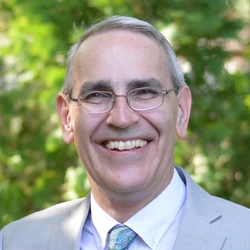
Dick “Cedar” Oliver: A science, math, technology, digital arts and design teacher in Waldorf high schools and middle schools for over 20 years, Cedar is also the author and co-author of numerous books and software titles and has worked with scientists, mathematicians, engineers and artists around the world. He attended the University of Maine and the University of Michigan in addition to the HiStep Waldorf Teacher Education program and 5-year Spacial Dynamics training. He currently serves as a visiting teacher and faculty mentor at several U.S. Waldorf schools and is a faculty member at CfA’s Waldorf high school teacher education program.
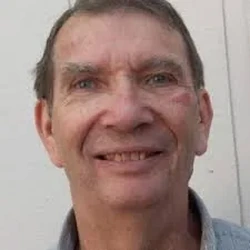
Paul Gierlach: Involved in Waldorf education for nearly forty years, first as a class teacher in Detroit; a high school teacher on the east coast, mid-west, and west coast of United States; lead teacher in Honolulu high school. Taught in teacher training programs and worked with faculties in the Mexico, Argentina and, currently, the United States and China. Created Dynamic Drawing for use in high school classrooms. Special interest lies in creating classroom environments that supports teacher’s work with students with different learning styles.
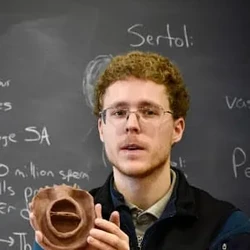
Jake Gerber: Jake currently teaches biology, chemistry, and mathematics at Desert Sage High School, a growing Waldorf-inspired charter school in Tucson, Arizona. He previously taught at the Rudolf Steiner School in NYC. Jake has published research on acoustic ecology and collaborated with the Laboratory of Morphogenesis at Rockefeller University, studying feather development. Jake holds a BA in Biology and an MA in Consciousness Studies and Transpersonal Psychology. He completed the WHiSTEP program tracking in Life Science, Physical Science, and Mathematics.
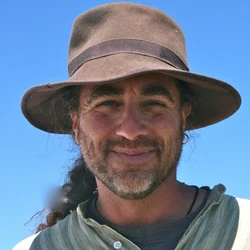
David Barham: Executive Director of Center for Anthroposophy since August 2024 and Director of CfA’s Waldorf High School Teacher Education Program (WHiSTEP) as of 2022, David has worked in four North American Waldorf schools, including one in Mexico, both as a class and high school teacher. Before joining CfA, he taught humanities at the Maine Coast Waldorf School in Freeport, ME, for more than a decade. In the fall of 2021, he was appointed to AWSNA’s Leadership Council as Leader for the Northeast/Quebec region. David continues to teach, write, and consult with various Waldorf schools.